Technology Trends Every Business Should Know in 2026
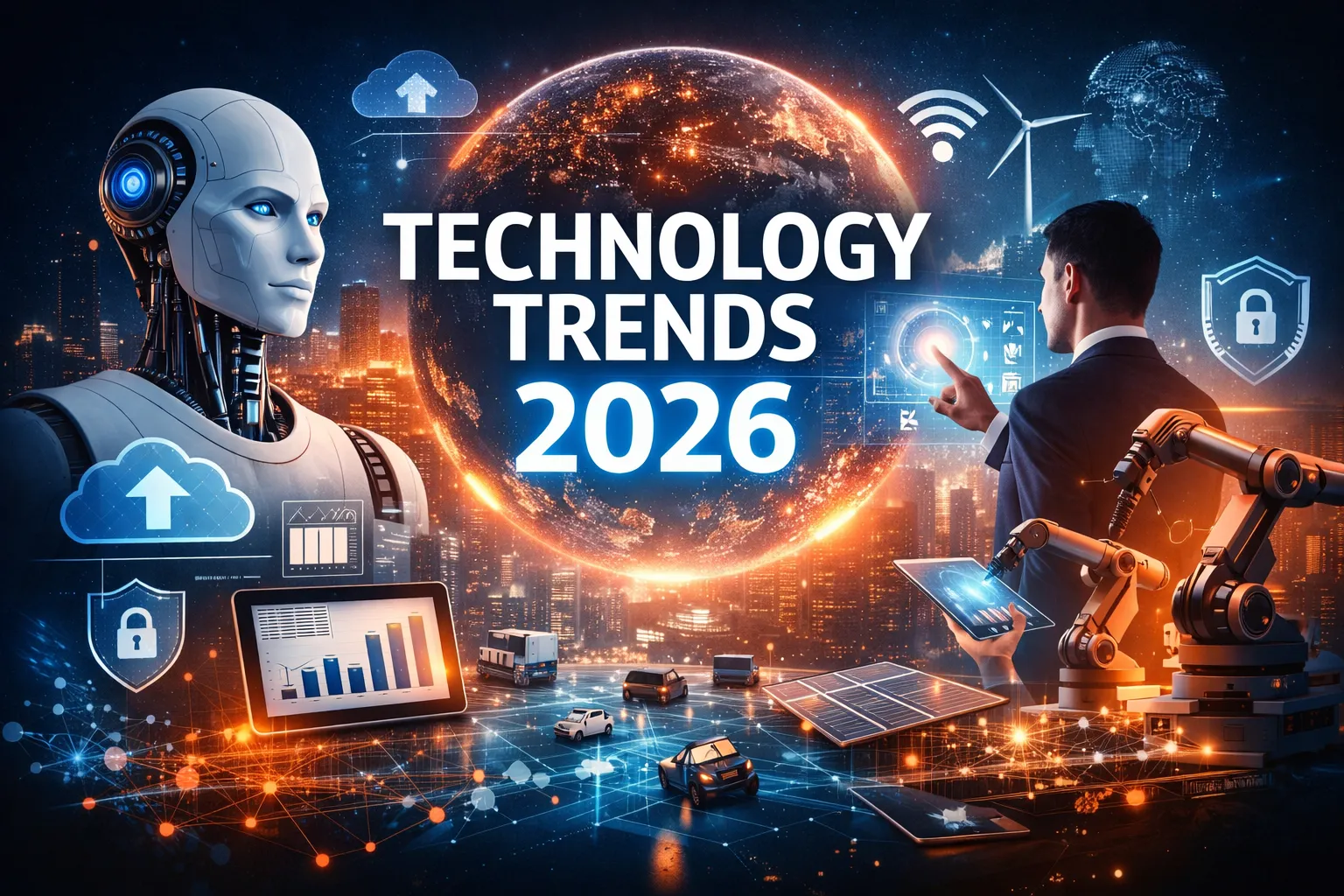
The year 2026 represents a defining moment in the evolution of business technology. Organizations are no longer simply adopting digital tools—they are building intelligent ecosystems where technology actively participates in decision-making, execution, and optimization.
The modern business environment is shaped by speed, data, and adaptability. Companies are expected to respond to market changes instantly, personalize customer experiences at scale, and operate efficiently with fewer resources. Technology is no longer a support function; it is the core driver of growth, innovation, and competitive advantage.
Understanding the key technology trends in 2026 is essential not only for staying competitive but also for building a future-ready organization capable of continuous evolution.
Artificial Intelligence as the Foundational Intelligence Layer
Artificial Intelligence has become the central intelligence layer that connects and enhances all business operations. In 2026, AI is not confined to isolated tools but is deeply integrated across entire organizational systems.
Expansion Across Functional Areas
AI is actively used in marketing for real-time campaign optimization, in finance for predictive risk analysis, in operations for demand forecasting, and in customer service for advanced conversational interactions. These systems communicate with each other, creating a unified and intelligent operational environment.
Transformation of Decision-Making
Traditional decision-making relied on historical data and human intuition. AI introduces predictive and prescriptive capabilities, allowing businesses to anticipate outcomes and take proactive measures. This significantly reduces uncertainty and improves strategic planning.
Scalability and Long-Term Value
AI enables organizations to scale operations without a proportional increase in resources. It allows businesses to handle complexity efficiently, making it a foundational technology for sustainable growth and long-term competitiveness.
Agentic AI and the Emergence of Autonomous Enterprise Systems
Agentic AI represents a significant advancement in artificial intelligence, enabling systems to operate independently with minimal human intervention. These systems are designed to achieve specific goals through continuous learning and execution.
Core Functional Capabilities
Agentic systems can define objectives, decompose them into actionable steps, execute tasks autonomously, and refine their performance over time. This creates a self-improving system that adapts to changing conditions.
Real-World Business Implementation
In e-commerce, agentic AI manages dynamic pricing and inventory optimization. In finance, it automates reporting and fraud detection. In logistics, it optimizes delivery routes and resource allocation. These applications demonstrate how businesses can operate more efficiently with minimal manual oversight.
Strategic Shift in Management
The adoption of agentic AI changes the role of leadership. Managers focus on setting strategic objectives rather than overseeing execution. This shift leads to faster decision cycles, improved efficiency, and better alignment with business goals.
Hyper-Automation and the Reinvention of Operational Workflows
Hyper-automation extends beyond traditional automation by integrating multiple technologies to automate entire business processes. It represents a holistic approach to operational efficiency.
Technological Integration
Hyper-automation combines artificial intelligence, machine learning, and robotic process automation to handle both structured and unstructured tasks. These systems can adapt to changing inputs and continuously optimize workflows.
Comprehensive Process Transformation
Processes such as employee onboarding, financial reconciliation, compliance monitoring, and supply chain management are fully automated. Systems identify inefficiencies, eliminate redundancies, and ensure consistent execution.
Impact on Business Performance
Hyper-automation significantly reduces operational costs while improving accuracy and speed. It enables organizations to operate continuously without interruptions, making it a critical component of modern business infrastructure.
Data as a Strategic Asset and Predictive Intelligence Engine
Data has evolved from a passive resource into a strategic asset that drives business decisions. In 2026, organizations rely on data to gain insights, predict trends, and optimize performance.
Shift to Real-Time and Predictive Analytics
Businesses are moving away from retrospective analysis toward real-time and predictive insights. This allows them to anticipate customer needs, market trends, and potential risks before they occur.
Unified Data Ecosystems
Modern data platforms integrate information from multiple sources into a centralized system. This enables seamless access to insights across departments, improving collaboration and decision-making.
Competitive Differentiation
Organizations that effectively leverage data can respond faster to market changes, personalize customer experiences, and optimize operations continuously. Data-driven strategies provide a significant competitive advantage.
Cybersecurity as a Core Business Strategy and Risk Framework
Cybersecurity has become a fundamental component of business strategy due to the increasing complexity of digital threats. It is no longer limited to IT departments but is integrated into overall risk management.
Evolution of Threat Landscape
Cyber threats are more sophisticated, with attackers using automation and artificial intelligence. This increases the scale and speed of attacks, requiring advanced defensive mechanisms.
Modern Security Models
Businesses are adopting Zero Trust architectures, where every access request is verified. Continuous monitoring systems detect anomalies and respond to threats in real time, reducing vulnerability.
Business Implications
Strong cybersecurity practices protect sensitive data, maintain customer trust, and ensure regulatory compliance. It is a critical factor in sustaining business operations and reputation.
Cloud Computing and Distributed Digital Infrastructure
Cloud computing has evolved into a flexible and distributed infrastructure model that supports modern business needs. Organizations are adopting hybrid and multi-cloud strategies to optimize performance and security.
Hybrid and Multi-Cloud Adoption
Businesses use a combination of public and private cloud environments to balance scalability and data control. This approach allows them to manage workloads efficiently while maintaining security.
Support for Advanced Technologies
Cloud infrastructure provides the computational power required for artificial intelligence, big data analytics, and real-time applications. It enables businesses to deploy and scale solutions efficiently.
Strategic Advantages
Cloud adoption reduces infrastructure costs, enhances flexibility, and supports innovation. It allows businesses to adapt quickly to changing demands and technological advancements.
Edge Computing and the Acceleration of Real-Time Intelligence
Edge computing addresses the need for faster data processing by bringing computation closer to the source of data generation. It plays a crucial role in applications that require immediate response.
Operational Efficiency and Speed
By reducing latency, edge computing enables real-time decision-making. This is essential for industries where delays can impact performance and outcomes.
Industry-Specific Applications
Edge computing is widely used in manufacturing for predictive maintenance, in healthcare for real-time monitoring, and in retail for instant analytics. These applications demonstrate its versatility and importance.
Value for Businesses
Edge computing improves performance, reliability, and efficiency. It supports applications that depend on speed, making it a vital component of modern technology ecosystems.
Customer Experience Transformation Through Hyper-Personalization
Customer experience has become a key differentiator in competitive markets. Businesses must deliver personalized interactions to meet evolving expectations.
Mechanism of Personalization
Artificial intelligence analyzes user behavior, preferences, and interactions to deliver tailored experiences. Content, recommendations, and services are customized in real time.
Impact on Engagement and Loyalty
Personalized experiences increase customer satisfaction, engagement, and retention. They also improve conversion rates by delivering relevant and timely interactions.
Strategic Importance
Hyper-personalization enables businesses to build stronger relationships with customers. It is a critical component of customer-centric strategies in 2026.
No-Code and Low-Code Platforms as Innovation Accelerators
The development landscape is becoming more accessible through no-code and low-code platforms. These tools empower non-technical users to create applications and solutions.
Shift in Development Paradigm
Businesses are moving from traditional development models to more flexible and collaborative approaches. Teams can build and deploy applications without extensive technical expertise.
Acceleration of Innovation
No-code and low-code platforms reduce development time and enable rapid experimentation. Businesses can test ideas, iterate quickly, and respond to market demands efficiently.
Organizational Impact
This democratization of development fosters a culture of innovation. It allows organizations to adapt quickly and maintain competitiveness in a rapidly changing environment.
Sustainable Technology and Responsible Digital Transformation
Sustainability is becoming a critical factor in technology adoption. Businesses are focusing on reducing environmental impact while maintaining efficiency and performance.
Key Areas of Focus
Organizations are investing in energy-efficient infrastructure, sustainable data centers, and responsible AI practices. These efforts align with environmental goals and regulatory requirements.
Drivers of Sustainability
Government regulations, customer expectations, and cost considerations are driving the adoption of sustainable technologies. Businesses must balance innovation with environmental responsibility.
Long-Term Benefits
Sustainable practices reduce operational costs, enhance brand reputation, and ensure compliance with regulations. They are essential for long-term business success.
AI-Augmented Workforce and the Evolution of Organizational Models
The workforce in 2026 is characterized by collaboration between humans and intelligent systems. This transformation is redefining how work is performed and managed.
Integration of AI in Daily Operations
Employees use AI tools to enhance productivity, automate routine tasks, and support decision-making. This allows them to focus on strategic and creative activities.
Changes in Work Structure
Remote and hybrid work models are supported by digital platforms, enabling businesses to access global talent. Collaboration tools facilitate seamless communication and coordination.
Future of Work
Organizations that embrace AI-augmented workforces are more flexible, efficient, and innovative. This model represents the future of organizational design and performance.
Conclusion
The technology trends of 2026 reflect a shift toward intelligent, automated, and data-driven business models. These trends are interconnected and collectively shape the future of business operations.
Organizations that understand and adopt these technologies will be better positioned to innovate, compete, and grow. The key is to implement solutions strategically, aligning them with business objectives and long-term goals.
The future belongs to businesses that are not only digital but also intelligent, adaptive, and resilient.
FAQs
What are the key technology trends businesses should focus on in 2026?
Businesses should focus on artificial intelligence, agentic AI, hyper-automation, data-driven strategies, cybersecurity, and cloud computing to remain competitive.
How does AI improve business performance in 2026?
AI enhances productivity, enables faster decision-making, automates processes, and improves customer experiences across various industries.
What is the significance of agentic AI for businesses?
Agentic AI allows systems to operate independently, reducing the need for manual intervention and improving efficiency in complex workflows.
Why is data considered a strategic asset?
Data provides insights that help businesses predict trends, optimize operations, and make informed decisions, giving them a competitive advantage.
How can organizations prepare for future technology trends?
Organizations should invest in AI, build strong data infrastructures, enhance cybersecurity, adopt cloud solutions, and continuously train their workforce.