What Are Managed IT Services and Why Businesses Need Them in 2026
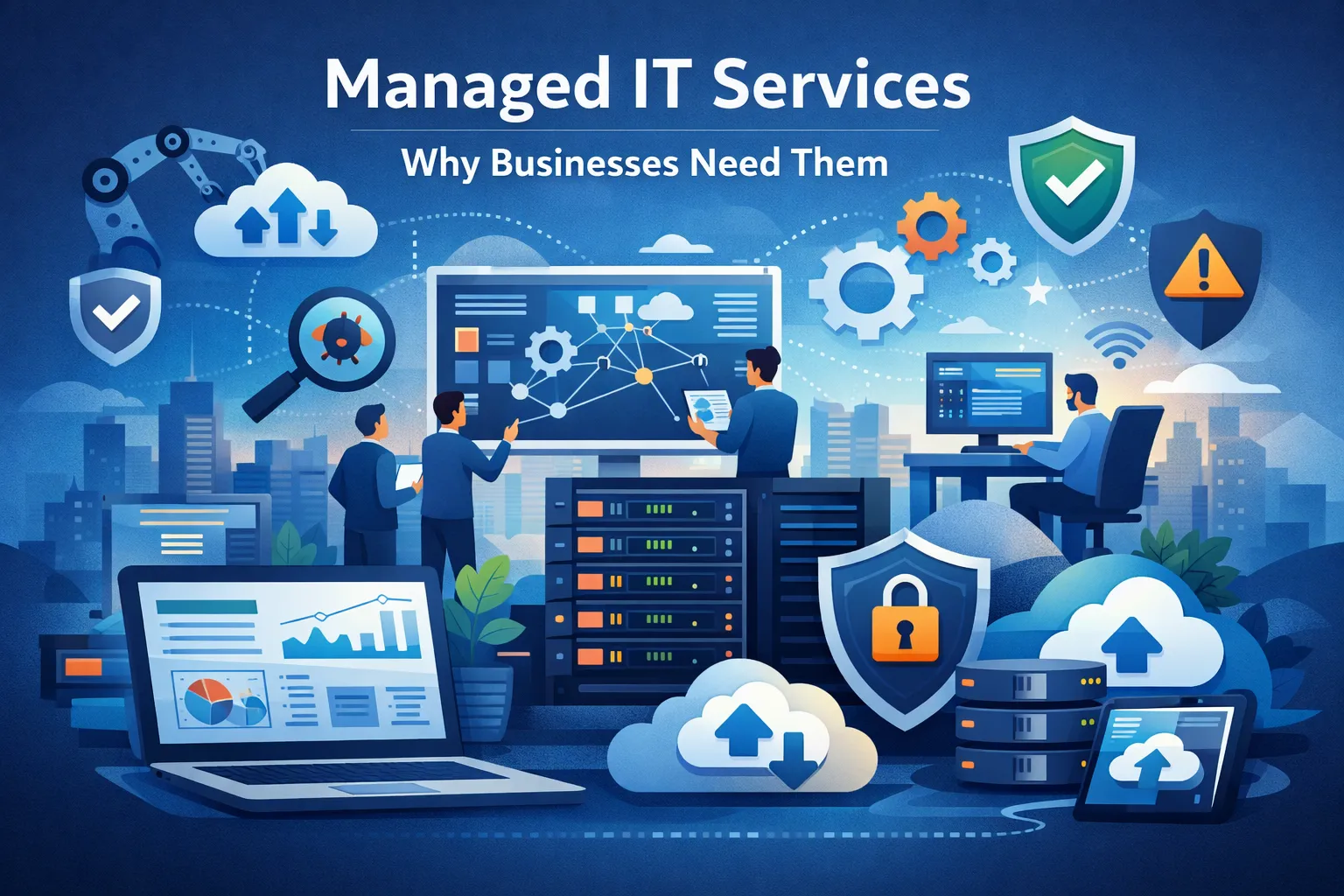
Technology has become the central nervous system of modern businesses. Every operation—from internal communication to customer interaction, data storage, financial transactions, and strategic decision-making—relies on IT infrastructure. As businesses scale, this infrastructure becomes more complex, interconnected, and vulnerable to risks.
Managing such an environment internally is no longer just challenging—it can be inefficient and risky. This is why organizations are increasingly adopting managed IT services as a structured and strategic solution.
Managed IT services go beyond technical support. They represent a shift toward continuous optimization, risk management, and long-term digital sustainability.
What Are Managed IT Services
Managed IT services refer to the outsourcing of IT responsibilities to a specialized third-party provider known as a Managed Service Provider (MSP). These providers take a proactive role in maintaining, monitoring, and improving an organization’s entire IT ecosystem.
Unlike traditional support models, managed IT services focus on prevention rather than reaction. Systems are constantly analyzed, risks are identified in advance, and corrective actions are implemented before disruptions occur.
Core Philosophy Behind Managed IT Services
The core idea is to transform IT from a cost center into a performance driver. Instead of spending resources on fixing issues, businesses invest in maintaining stability, security, and efficiency.
This model ensures that IT infrastructure aligns with business goals, rather than becoming a bottleneck.
Strategic Difference from Traditional IT Models
This structural difference enables organizations to operate with greater confidence and consistency.
How Managed IT Services Work
Managed IT services operate through a continuous lifecycle model that ensures adaptability and resilience.
Comprehensive Assessment and Alignment
The process begins with a deep analysis of the existing IT environment. This includes infrastructure mapping, risk identification, performance evaluation, and alignment with business objectives.
The goal is not just to understand current systems but to identify gaps that may impact future growth.
Deployment of Integrated Systems
Once the strategy is defined, the MSP deploys tools and frameworks for monitoring, automation, and security. These systems are designed to work together, creating a unified IT environment.
Integration is a key factor here, as disconnected systems often lead to inefficiencies and vulnerabilities.
Continuous Monitoring and Predictive Maintenance
Monitoring is performed in real time, using advanced tools that track system performance, detect anomalies, and analyze usage patterns.
Predictive maintenance allows potential failures to be addressed before they affect operations.
Iterative Optimization and Reporting
Regular reporting provides insights into system performance, security status, and operational efficiency. Based on this data, improvements are implemented continuously.
This iterative approach ensures that IT systems evolve alongside the business.
Core Components of Managed IT Services
Managed IT services encompass multiple layers of technology management, each contributing to overall system stability and performance.
Infrastructure and Network Management
This component ensures that servers, networks, and hardware function efficiently. It involves performance monitoring, load balancing, and capacity planning.
A well-managed infrastructure reduces latency, improves reliability, and supports seamless operations.
Cybersecurity and Risk Mitigation
Security is not a single solution but a multi-layered strategy. Managed IT services implement defense mechanisms across all levels of the system.
Key Security Layers
Endpoint protection for devices
Network-level firewalls
Behavioral threat detection
Data encryption protocols
Compliance and regulatory alignment
This layered approach minimizes vulnerabilities and strengthens resilience against attacks.
Cloud Ecosystem Management
Cloud environments provide scalability and flexibility but require proper configuration and governance.
MSPs manage cloud resources, optimize costs, and ensure secure access across distributed systems.
Data Protection and Continuity Planning
Data is one of the most valuable assets of any business. Managed IT services ensure that data is consistently backed up and can be restored quickly.
Disaster recovery plans are designed to minimize downtime and maintain operational continuity.
End-User Support and Experience
Technical issues faced by employees can reduce productivity. Managed IT services provide structured support systems that resolve issues efficiently.
This improves user experience and ensures smoother workflows.
Lifecycle Management and Updates
Technology evolves rapidly, and outdated systems create risks. Managed IT services ensure continuous updates, patch management, and system upgrades.
This keeps the IT environment secure and aligned with current standards.
Why Businesses Need Managed IT Services
Modern businesses operate in a highly dynamic and risk-prone environment, making managed IT services a necessity.
Escalating Cybersecurity Threat Landscape
Cyber threats are becoming more sophisticated, targeting vulnerabilities across networks, applications, and user behavior.
Managed IT services provide proactive defense mechanisms that reduce exposure and protect critical assets.
Increasing Operational Complexity
IT environments now include hybrid systems, cloud platforms, remote access tools, and integrated applications.
Managing this complexity internally can lead to inefficiencies and increased risk. Managed services simplify operations through centralized control.
Financial Efficiency and Resource Optimization
Maintaining internal IT teams requires significant investment in hiring, training, and infrastructure.
Managed IT services convert these costs into predictable operational expenses while providing access to higher expertise.
Enhanced Productivity and System Reliability
Reliable systems enable employees to work without interruptions. Managed IT services ensure consistent performance, reducing delays and improving efficiency.
Scalability and Adaptive Growth
Businesses need IT systems that can scale with growth. Managed IT services provide flexible solutions that adapt to changing requirements.
Risk Management and Business Continuity
Unexpected disruptions can have significant consequences. Managed IT services ensure that recovery mechanisms are in place, minimizing downtime and impact.
Benefits of Managed IT Services
These benefits collectively strengthen the overall performance and resilience of a business.
Emerging Trends in Managed IT Services
Managed IT services are evolving to meet the demands of modern digital ecosystems.
Artificial Intelligence and Predictive Analytics
AI is being used to analyze system behavior, predict failures, and automate responses. This enhances efficiency and reduces human intervention.
Zero Trust Architecture
This model ensures that every access request is verified, reducing the risk of unauthorized access and internal threats.
Cloud-Native and Hybrid Environments
Businesses are adopting cloud-first strategies while maintaining hybrid infrastructures. Managed IT services support seamless integration across these environments.
Automation and Self-Healing Systems
Automation reduces manual workload, while self-healing systems can resolve minor issues automatically.
Remote and Distributed Workforce Enablement
Managed IT services provide secure access and collaboration tools for remote teams, ensuring productivity and security.
When Businesses Should Adopt Managed IT Services
Organizations should consider managed IT services when they encounter operational inefficiencies or increasing risks.
Key Indicators
Frequent system downtime affecting operations
Limited internal IT expertise
Growing cybersecurity concerns
Rapid business expansion
Difficulty managing IT costs
These indicators highlight the need for a more structured and proactive IT strategy.
How to Choose the Right Managed Service Provider
Selecting the right provider is critical for achieving long-term benefits.
Evaluation Criteria
Proven technical expertise and experience
Strong cybersecurity framework
Availability of continuous support
Transparent service agreements
Ability to scale with business needs
A suitable MSP should function as a strategic partner, contributing to both operational efficiency and business growth.
Final Thoughts
Managed IT services represent a fundamental shift in how businesses approach technology. Instead of reacting to problems, organizations adopt a proactive, data-driven, and strategic model that ensures stability, security, and scalability.
As digital transformation continues to accelerate, the importance of managed IT services will only increase. Businesses that embrace this approach position themselves for sustained growth, reduced risk, and long-term success.
FAQs
What are managed IT services in simple terms
Managed IT services involve outsourcing IT operations to experts who continuously monitor and maintain systems to prevent issues before they occur.
Why are managed IT services important for modern businesses
They provide security, efficiency, and scalability, helping businesses operate smoothly in a technology-driven environment.
Are managed IT services suitable for small and medium businesses
Yes, they are particularly beneficial for smaller businesses that lack in-house expertise and resources.
How do managed IT services improve cybersecurity
They implement multi-layered protection, continuous monitoring, and proactive threat detection to safeguard systems.
What is the difference between managed IT services and traditional IT support
Managed IT services focus on prevention and continuous management, while traditional IT support is reactive and issue-based.
Can managed IT services support remote and hybrid work models
Yes, they provide secure access, cloud integration, and monitoring tools to support distributed work environments.