Why Every Business Needs Regular Data Backup in 2026
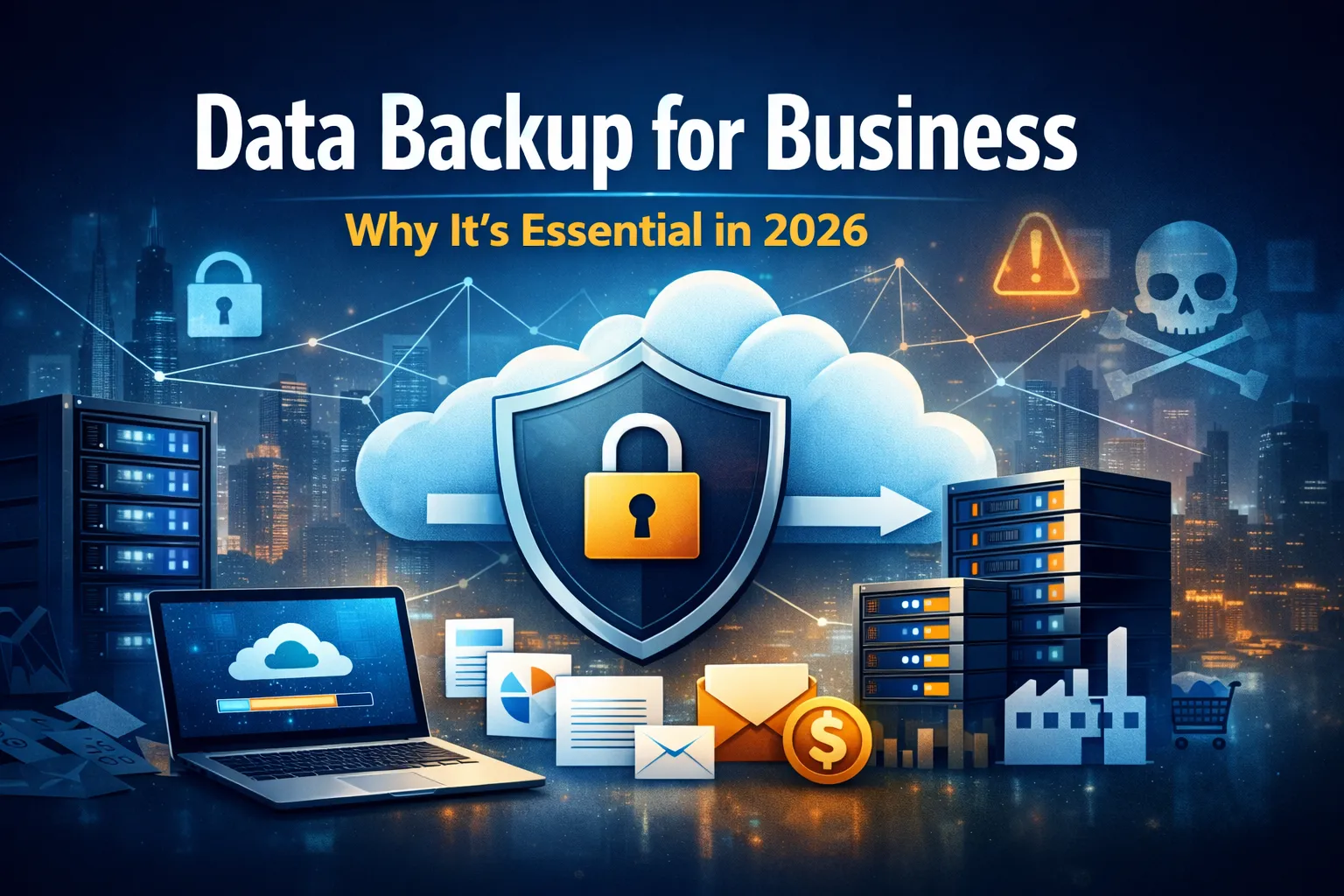
In the digital economy of 2026, data is not just a supporting asset but the central engine that drives business operations, decision-making, and customer engagement. Every transaction, communication, and workflow depends on the continuous availability of accurate and secure data.
As businesses scale and digital transformation accelerates, the volume and complexity of data increase significantly. This growth also introduces higher risks, including cyber threats, system failures, and operational errors. Without a structured backup strategy, even a minor disruption can lead to serious consequences.
Regular data backup ensures that businesses maintain control over their information, reduce operational uncertainty, and build resilience against unexpected events. It transforms data from a vulnerable asset into a protected and recoverable resource that supports long-term stability.
Understanding Data Backup as a Business Infrastructure Component
Data backup is no longer a simple technical task but a core part of modern business infrastructure. It involves creating synchronized, secure, and redundant copies of data across multiple environments to ensure availability under all circumstances.
Modern backup systems operate through automation, real-time synchronization, and encrypted storage. They are integrated into business workflows, ensuring that data is continuously protected without interrupting daily operations. This integration allows businesses to maintain up-to-date backups without relying on manual intervention.
A well-designed backup infrastructure typically includes local storage for quick recovery, cloud storage for scalability, and offsite storage for disaster resilience. This layered approach ensures that data remains accessible regardless of the type of disruption encountered.
Analyzing the Full Spectrum of Data Loss Risks
Data loss risks are multifaceted and often interconnected, making them difficult to predict and prevent entirely. Understanding these risks is essential for developing an effective backup strategy.
These risks highlight that data loss is not a single-event problem but a continuous exposure. Businesses must therefore adopt proactive measures rather than reactive solutions.
How Regular Backup Enables Operational Continuity
Operational continuity depends on the ability to maintain consistent workflows despite disruptions. Regular data backup provides the foundation for this continuity by ensuring that systems can be restored quickly and accurately.
When data is backed up frequently, businesses can recover from incidents with minimal downtime. This reduces the impact on productivity, customer service, and revenue generation. Recovery processes become structured and predictable rather than chaotic and time-consuming.
Without backups, organizations are forced to reconstruct lost data manually, which often leads to incomplete recovery and extended downtime. Regular backup eliminates this uncertainty and provides a reliable path to restoring normal operations.
Integrating Data Backup into Cybersecurity Architecture
Data backup plays a critical role within a broader cybersecurity framework. While preventive measures aim to block threats, backup systems ensure that businesses can recover when defenses are breached.
Ransomware attacks have made backup systems particularly important. These attacks encrypt data and disrupt access, but organizations with secure backups can restore their systems without engaging with attackers. This reduces financial risk and strengthens overall security resilience.
Modern backup systems also incorporate encryption, access control, and monitoring features. These elements protect backup data from unauthorized access and ensure that recovery points remain secure and reliable.
Strategic Comparison of Backup Technologies
Different backup technologies offer varying benefits, and selecting the right combination is essential for optimal performance. Businesses must evaluate factors such as data volume, recovery speed, and operational complexity.
Hybrid backup solutions are increasingly preferred because they combine the advantages of speed, redundancy, and scalability in a single framework.
Optimizing Backup Frequency for Data Protection
Backup frequency must align with how frequently business data changes. Organizations that generate high volumes of data require more frequent backups to minimize potential loss.
By aligning backup schedules with data importance, businesses can ensure efficient resource usage while maintaining strong protection.
Core Principles of an Effective Backup Strategy
An effective backup strategy is built on consistency, redundancy, and security. These principles ensure that data remains protected under various conditions.
The 3-2-1 rule provides a foundational structure by maintaining multiple copies across different storage types. Automation ensures that backups are performed regularly without relying on manual processes. Regular testing verifies that data can be restored successfully.
Security measures such as encryption and access control protect backup data from unauthorized access. Together, these principles create a comprehensive system that balances reliability, efficiency, and protection.
Advanced Trends Transforming Data Backup Systems
Technological advancements are reshaping how businesses approach data backup. These innovations improve efficiency, security, and scalability.
Artificial intelligence is being used to predict system failures and optimize backup schedules. Immutable storage ensures that backup data cannot be altered, providing strong protection against ransomware. Multi-cloud strategies offer flexibility and reduce dependency on a single provider.
Backup-as-a-Service solutions are also gaining popularity, allowing businesses to outsource backup management while maintaining high levels of control and security. These trends indicate a shift toward more intelligent and automated backup ecosystems.
Common Limitations and Challenges in Backup Implementation
Despite its importance, implementing an effective backup system can present challenges. These challenges often arise from poor planning or lack of awareness.
Common issues include inconsistent backup schedules, insufficient storage planning, and failure to test recovery processes. Some organizations also underestimate the importance of securing backup data, leaving it vulnerable to cyber threats.
Addressing these challenges requires a structured approach that combines technical expertise with organizational discipline. Continuous evaluation and improvement are essential for maintaining an effective backup system.
Long-Term Strategic Value of Data Backup
Data backup is not only a protective measure but also a strategic investment. It enhances business resilience, supports scalability, and ensures long-term operational stability.
Organizations with strong backup systems can adapt more quickly to changes, recover from disruptions efficiently, and maintain consistent performance. This resilience provides a competitive advantage in dynamic market environments.
Over time, data backup contributes to improved risk management, stronger customer relationships, and sustainable growth. It transforms data protection into a core component of business strategy.
FAQs
What is the most reliable backup strategy for businesses
A hybrid backup strategy that combines cloud and local storage offers the best balance of speed, redundancy, and security.
How often should businesses update their backups
Critical data should be backed up in real time or daily, while less critical data can follow weekly schedules.
Why is backup important in cybersecurity
Backup ensures data recovery after cyberattacks, reducing dependence on attackers and minimizing operational disruption.
Are cloud backups completely secure
Cloud backups are highly secure, but additional measures such as encryption and access control further enhance protection.
What are immutable backups
Immutable backups are storage systems where data cannot be modified or deleted, providing strong protection against ransomware.
Can businesses operate without backup systems
Operating without backups exposes businesses to high risk, including permanent data loss, financial damage, and operational failure.