Common IT Problems in Offices and How to Fix Them
Technology is no longer just a support system in offices—it is the foundation on which modern business operations run. From communication and collaboration to data storage and decision-making, nearly every process depends on stable and efficient IT systems. However, as organizations become more digitally dependent, the likelihood of encountering IT-related problems increases significantly.
What makes these challenges more critical today is their interconnected nature. A single issue—whether it is slow internet, a system crash, or a security breach—can disrupt multiple workflows simultaneously. These disruptions not only reduce productivity but also affect employee morale, customer experience, and overall business performance.
To build a resilient and efficient workplace, it is essential to understand not just what these IT problems are, but why they occur and how they can be solved in a structured and sustainable way.
The Growing Complexity of IT Environments in Offices
Modern office environments are no longer limited to a few computers connected to a local network. Today’s workplaces operate within a hybrid digital ecosystem that combines on-premise infrastructure, cloud platforms, mobile devices, and remote access systems. This multi-layered environment increases flexibility but also introduces new points of failure.
Each additional tool, device, or platform adds complexity. Employees often switch between applications, access shared resources from different locations, and rely on real-time systems that demand consistent performance. Without proper integration and management, this complexity leads to inefficiencies and frequent disruptions.
To manage this effectively, businesses must adopt a holistic approach to IT. Instead of treating individual problems in isolation, organizations need to view their IT infrastructure as a connected system where performance, security, and accessibility are interdependent.
Slow Network Performance and Bandwidth Mismanagement
Network performance issues are among the most visible and disruptive IT problems in offices. Employees experience delays in loading applications, interruptions during virtual meetings, and slow file transfers, all of which directly impact productivity and workflow continuity.
The root cause of slow performance often lies in inefficient bandwidth distribution rather than insufficient internet speed. When multiple users access high-demand applications simultaneously, the network becomes congested. Additionally, outdated routers, lack of traffic prioritization, and poor network configuration further reduce efficiency.
Improving network performance requires a strategic approach. Businesses should implement bandwidth management techniques, prioritize critical applications, and upgrade networking equipment to handle modern workloads. Continuous monitoring allows IT teams to identify usage patterns and optimize performance before issues escalate.
Network Instability and Infrastructure Weaknesses
While performance issues affect speed, network instability affects reliability. Frequent disconnections, inconsistent access to shared resources, and unpredictable system behavior can disrupt daily operations and create frustration among employees.
These issues are often the result of weak infrastructure. Poorly organized cabling, overloaded network devices, and inconsistent configuration practices lead to an unstable environment. In many cases, networks evolve over time without proper planning, resulting in fragmented systems that are difficult to manage.
A stable network requires a well-designed infrastructure. Structured cabling, properly configured devices, and regular maintenance ensure consistent performance. Monitoring tools play a crucial role in identifying potential failures early, allowing businesses to address issues proactively rather than reactively.
Cybersecurity Risks and Organizational Exposure
Cybersecurity has become one of the most critical concerns for modern offices. As businesses store more data digitally and rely on online systems, they become increasingly vulnerable to cyber threats. These threats are not limited to large organizations—small and medium businesses are often targeted due to weaker defenses.
The majority of security breaches occur because of internal vulnerabilities rather than sophisticated attacks. Weak passwords, lack of employee awareness, and outdated systems create easy entry points for attackers. Phishing emails, malware, and unauthorized access attempts are common methods used to exploit these weaknesses.
To reduce risk, organizations must implement layered security measures. This includes strong authentication protocols, regular employee training, and continuous system updates. Access to sensitive data should be carefully controlled, and backup systems should be in place to ensure recovery in case of an incident. A proactive approach to security is essential for protecting both data and business continuity.
Outdated Systems and Technological Limitations
Outdated hardware and software are often overlooked because they continue to function at a basic level. However, their limitations become evident as workloads increase and new tools are introduced. Slow performance, compatibility issues, and higher maintenance costs are common consequences of relying on legacy systems.
Older systems also pose security risks, as they may not support modern updates or protection mechanisms. This makes them more vulnerable to attacks and reduces the overall reliability of the IT environment.
A structured upgrade strategy helps address these challenges. Businesses should evaluate system performance regularly and prioritize upgrades based on operational impact. Transitioning to cloud-based solutions can improve scalability and reduce dependency on physical infrastructure, while standardizing systems across the organization simplifies management and integration.
System Failures, Crashes, and Performance Degradation
System instability is one of the most disruptive IT problems, as it directly affects employee productivity and confidence. Crashes and freezing often occur without warning, leading to data loss and workflow interruptions.
These issues are typically caused by a combination of factors, including insufficient system resources, software conflicts, and lack of maintenance. Over time, systems accumulate unnecessary processes and outdated files that reduce efficiency and increase the likelihood of failure.
Improving system reliability requires continuous optimization. Upgrading hardware components such as storage and memory enhances performance, while regular maintenance ensures that systems remain clean and efficient. Monitoring tools help identify potential issues before they result in system failures, allowing businesses to maintain consistent performance.
Data Loss and Inadequate Backup Strategies
Data is one of the most valuable assets for any organization, yet many businesses fail to implement effective backup strategies. Data loss can occur due to human error, hardware failure, or cyber incidents, and its impact can be severe if recovery systems are not in place.
A common misconception is that having a backup system is sufficient. In reality, backups must be reliable, regularly updated, and tested to ensure they can be restored when needed. Without verification, backup systems may fail at critical moments.
An effective data protection strategy involves multiple layers. Data should be stored in different formats and locations, including both local and cloud environments. Automated backup processes reduce the risk of human error, while regular testing ensures that recovery procedures are effective and efficient.
Software Fragmentation and Integration Challenges
Modern offices rely on a wide range of software tools for communication, project management, and data processing. While these tools enhance productivity, they can also create challenges when they are not properly integrated.
Fragmented software environments lead to inefficiencies such as duplicated work, inconsistent data, and communication gaps. Employees may need to switch between multiple platforms, increasing complexity and reducing focus on core tasks.
To address this, organizations should standardize their software environment and prioritize tools that support integration. Evaluating software usage regularly helps identify redundancies and streamline workflows. A well-integrated system improves efficiency and ensures that information flows seamlessly across departments.
Device Management and Operational Inefficiencies
Physical devices remain an essential part of office operations, even in highly digital environments. Managing these devices effectively is crucial for maintaining productivity and minimizing disruptions.
Device-related issues often arise due to outdated drivers, improper configuration, and lack of centralized management. When devices are not properly maintained, they become unreliable and require frequent troubleshooting.
A structured device management approach ensures consistency and reliability. Centralized systems allow IT teams to monitor and manage devices efficiently, while regular updates keep them functioning optimally. Establishing clear usage policies also helps reduce unnecessary complications and improves overall operational efficiency.
Lack of Strategic IT Planning and Governance
One of the most significant challenges in office IT management is the absence of a long-term strategy. Many organizations focus on resolving immediate issues without addressing underlying causes, leading to repeated disruptions and increased costs.
Without proper planning, IT systems grow in an unstructured manner. New tools and devices are added without considering their impact on the overall infrastructure, resulting in complexity and inefficiency.
Developing a strategic IT plan allows businesses to align technology with their goals. Regular audits, performance evaluations, and clear governance policies ensure that IT systems remain efficient and scalable. A proactive approach reduces risks and supports long-term growth.
Remote Access, Hybrid Work, and Security Balance
The shift toward remote and hybrid work has introduced new challenges for IT systems. Employees now access company resources from various locations and devices, increasing both complexity and security risks.
Ensuring secure and reliable access is essential for maintaining productivity and protecting sensitive data. Without proper controls, remote access can expose systems to potential threats.
To address this, businesses should implement secure access frameworks and cloud-based solutions that enable seamless collaboration. Managing devices remotely and defining clear access permissions ensures consistency and security across the organization. Balancing accessibility with protection is key to supporting modern work environments.
FAQs
What are the most common IT problems in offices
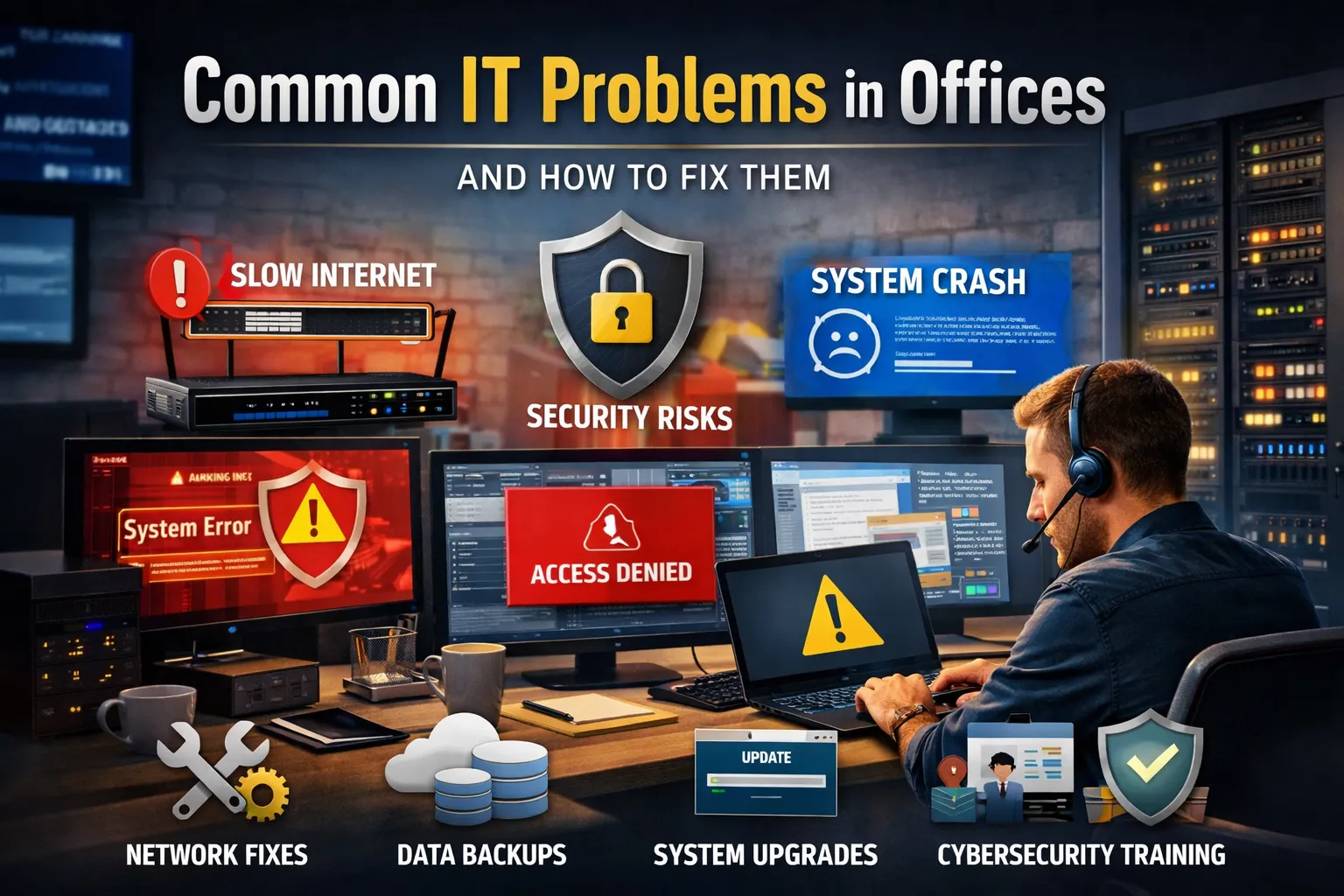
Common IT problems include slow network performance, connectivity instability, cybersecurity risks, outdated systems, and data loss.
Why do IT systems fail frequently in offices
Failures occur due to lack of maintenance, outdated infrastructure, increasing complexity, and absence of proactive management.
How can organizations improve IT efficiency
Organizations can improve efficiency by adopting structured IT strategies, upgrading systems, and implementing continuous monitoring.
What role does cybersecurity play in office IT systems
Cybersecurity protects sensitive data, ensures system reliability, and prevents disruptions caused by unauthorized access or attacks.
How can businesses prevent recurring IT problems
Preventing recurring issues requires regular audits, employee training, system updates, and a proactive approach to IT management.
Conclusion
IT problems in offices are not isolated technical issues—they are reflections of how well technology is managed within an organization. As workplaces become more digital and interconnected, the importance of structured IT management continues to grow.
Businesses that adopt a proactive and strategic approach to IT are better equipped to handle challenges and maintain operational efficiency. By investing in reliable systems, continuous improvement, and strong security practices, organizations can transform IT from a source of disruption into a driver of productivity and growth.
At its highest level, effective IT management is not about fixing problems—it is about creating an environment where problems occur less frequently and are resolved more efficiently when they do.