How to Choose the Right IT Support Company (Complete Strategic Framework for 2026)
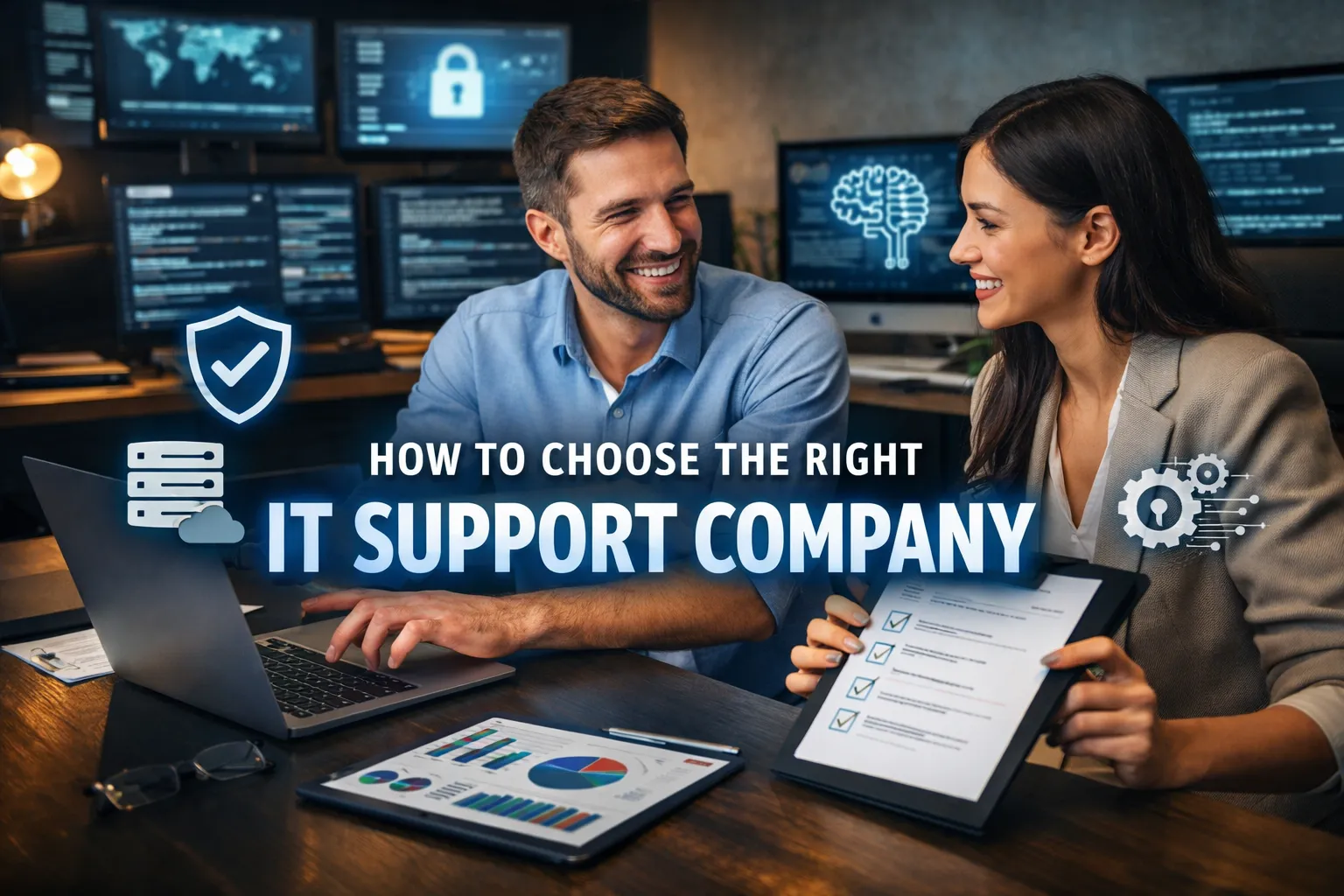
Choosing the right IT support company is no longer a routine operational task—it is a foundational business decision that directly influences performance, security, scalability, and long-term sustainability. In a digital-first economy, where even minor technical disruptions can halt operations, businesses cannot afford to rely on outdated or reactive IT support models.
A well-chosen IT partner becomes an extension of your organization, helping you optimize infrastructure, reduce risk, and align technology with business objectives. On the other hand, a poor choice leads to inefficiencies, security vulnerabilities, and recurring operational disruptions.
This guide provides a deeply structured and practical framework to help you evaluate, compare, and select the most suitable IT support company with confidence.
Understanding the Strategic Role of IT Support in Modern Organizations
The role of IT support has evolved significantly over the past decade. It is no longer limited to troubleshooting hardware or fixing software issues. Today, IT support companies function as strategic enablers that ensure business continuity, digital transformation, and operational resilience.
Modern IT providers are responsible for maintaining system uptime, optimizing network performance, securing data, and enabling seamless collaboration across teams and locations. They also play a critical role in aligning technology investments with business goals, ensuring that every technological decision contributes to growth and efficiency.
Businesses that recognize this strategic role are better positioned to select partners who deliver long-term value rather than short-term fixes.
Defining Business Requirements with Precision and Future Alignment
A successful selection process begins with a clear and detailed understanding of your business requirements. Without this clarity, it becomes difficult to evaluate whether an IT provider is truly capable of meeting your needs.
This process involves analyzing your existing infrastructure, identifying performance bottlenecks, assessing security gaps, and defining future objectives such as expansion, automation, or cloud migration. It also requires evaluating how dependent your operations are on technology and determining acceptable levels of downtime.
By aligning current needs with future goals, businesses can select IT support companies that are capable of growing alongside them rather than becoming limitations over time.
Understanding IT Support Models and Their Operational Impact
Different IT support models offer varying levels of service, cost structures, and risk exposure. Choosing the right model is essential for maintaining operational efficiency.
Managed IT services provide continuous monitoring, maintenance, and proactive issue resolution. This model ensures stability and predictability, making it ideal for businesses with complex or critical operations. Break-fix support, in contrast, focuses on resolving issues only when they arise, which can lead to unpredictable costs and downtime. Co-managed IT services offer a hybrid approach, allowing businesses to combine internal capabilities with external expertise.
Selecting the right model requires balancing cost, risk tolerance, and operational complexity.
Evaluating Technical Expertise and Industry-Specific Knowledge
Technical capability is a fundamental requirement, but industry-specific knowledge significantly enhances the effectiveness of IT support. Providers who understand the unique challenges of your industry can deliver more targeted and efficient solutions.
For example, financial institutions require robust data protection and compliance measures, while eCommerce businesses prioritize uptime and transaction security. Healthcare organizations must adhere to strict privacy regulations and data handling standards.
In addition to industry experience, certifications and ongoing training demonstrate a provider’s commitment to maintaining high technical standards. However, practical problem-solving ability and real-world experience remain equally important.
Assessing Cybersecurity Frameworks and Risk Mitigation Capabilities
Cybersecurity is a critical component of modern IT support, as businesses face increasingly sophisticated threats. A reliable IT support company must provide a comprehensive security framework that addresses prevention, detection, and response.
This includes advanced threat monitoring, endpoint protection, secure data storage, and disaster recovery planning. Additionally, businesses should ensure that their IT provider offers regular security audits and employee awareness training to minimize human-related risks.
A strong cybersecurity strategy not only protects data but also enhances customer trust and business credibility.
Analyzing Response Time, Reliability, and Service Level Agreements
Response time is one of the most critical factors in evaluating an IT support company. Delays in addressing technical issues can lead to significant operational disruptions and financial losses.
Professional IT providers define their response and resolution commitments through service level agreements. These agreements outline how quickly the provider will respond to issues, the expected resolution time, and the level of support available during emergencies.
Businesses should also evaluate the provider’s track record in meeting these commitments and their ability to handle high-pressure situations effectively.
Understanding Proactive Support and Continuous Optimization
The distinction between proactive and reactive IT support is a key indicator of service quality. Proactive providers continuously monitor systems, identify potential risks, and implement preventive measures to avoid disruptions.
This approach includes regular system updates, performance tuning, and early detection of vulnerabilities. Continuous optimization ensures that systems operate efficiently and adapt to changing business needs.
Businesses that invest in proactive IT support benefit from reduced downtime, improved performance, and greater operational stability.
Evaluating Scalability and Long-Term Technological Alignment
As businesses grow, their technological requirements become more complex. An effective IT support company must be capable of scaling its services to match this growth.
This includes supporting larger teams, managing increased data volumes, integrating new technologies, and adapting to evolving business models such as remote or hybrid work environments. Long-term alignment ensures that the IT provider remains relevant and valuable as the business evolves.
Scalability is not just about growth—it is about ensuring continuity and avoiding disruptions during transitions.
Reviewing Pricing Models, Transparency, and Value Delivery
Pricing should be evaluated in the context of value rather than cost alone. Transparent pricing models help businesses understand what they are paying for and avoid unexpected expenses.
Common pricing structures include per-user, per-device, and fixed monthly packages. Each model has its advantages, depending on the size and complexity of the business.
Businesses should prioritize providers who offer clear service definitions, flexible contracts, and a strong focus on delivering measurable value.
Assessing Communication, Collaboration, and Client Experience
Effective communication is essential for a successful partnership with an IT support company. Providers must be able to explain technical concepts in a clear and understandable manner, ensuring that business leaders can make informed decisions.
Regular updates, performance reports, and proactive communication contribute to a positive client experience. Additionally, providers should demonstrate an understanding of the business’s goals and align their services accordingly.
Strong communication fosters trust, improves collaboration, and enhances overall service quality.
Adapting to Emerging Trends and Future Technologies
The IT landscape is constantly evolving, and businesses must choose providers who stay ahead of these changes. Emerging trends such as artificial intelligence, cloud computing, and automation are reshaping IT support.
AI-driven systems enable predictive maintenance and faster issue resolution, while cloud-first strategies provide flexibility and scalability. Zero-trust security models enhance protection by continuously verifying users and devices.
Providers who embrace these trends are better equipped to deliver efficient, future-ready solutions.
Avoiding Common Pitfalls and Strategic Mistakes
Many businesses make critical mistakes when selecting IT support companies, often due to a lack of research or rushed decision-making. These mistakes include prioritizing cost over quality, ignoring cybersecurity capabilities, failing to verify credentials, and overlooking scalability.
Another common mistake is choosing providers who focus only on short-term fixes rather than long-term strategy. Avoiding these pitfalls requires a structured evaluation process and a clear understanding of business priorities.
Final
Selecting the right IT support company is a strategic investment that influences every aspect of your business. The ideal provider should combine technical expertise, proactive support, strong cybersecurity, and clear communication with a deep understanding of your business objectives.
By following a structured approach and evaluating providers based on comprehensive criteria, businesses can build long-term partnerships that drive efficiency, innovation, and growth.
The goal is not just to find a service provider, but to establish a partnership that supports your business at every stage of its journey.
FAQs
What is the most effective IT support model for modern businesses?
Managed IT services are the most effective because they provide proactive monitoring, predictable costs, and continuous optimization.
How can businesses ensure their IT support company is secure?
Businesses should evaluate the provider’s cybersecurity framework, including threat detection, data protection, and incident response capabilities.
Why is proactive IT support important?
Proactive support prevents issues before they occur, reducing downtime and improving overall system performance.
How should businesses evaluate pricing for IT support?
Pricing should be assessed based on value, transparency, and service quality rather than cost alone.
Can IT support companies help with digital transformation?
Yes, modern IT providers play a key role in implementing new technologies and aligning IT strategies with business growth.
What factors should be prioritized when selecting an IT support company?
Key factors include reliability, technical expertise, cybersecurity capabilities, scalability, and effective communication.