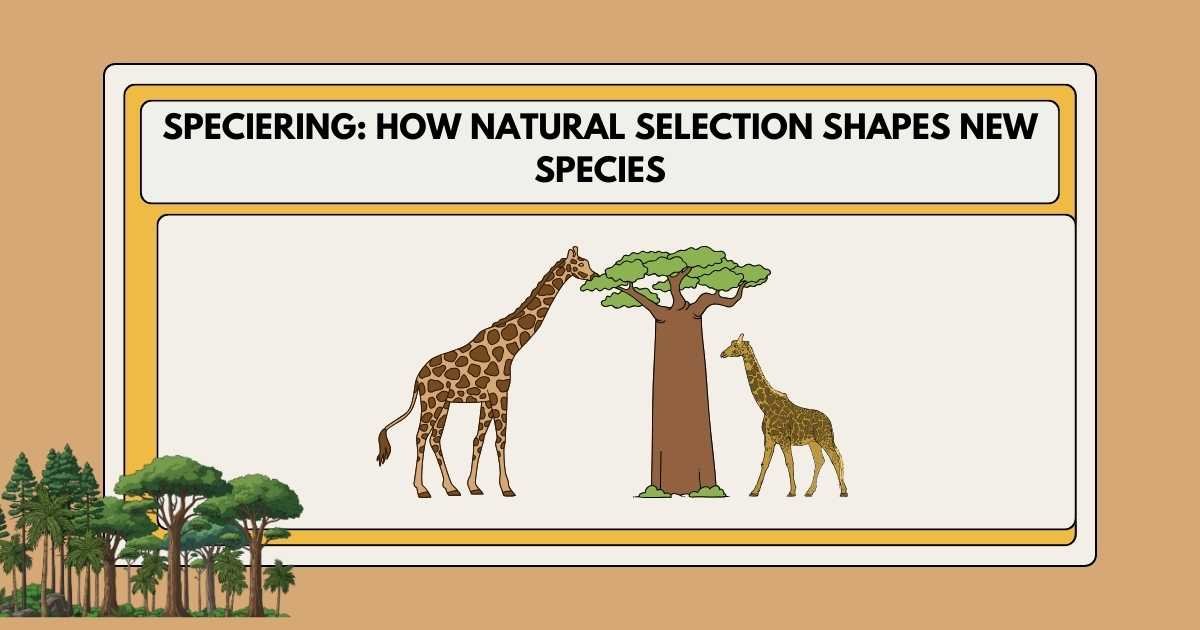
Speciering, or speciation, is the driving force behind the diversification of life on Earth. It is the biological process by which new species evolve from a single ancestral species, leading to the rich biodiversity that we see in ecosystems today. Whether in the dense rainforests, vast oceans, or isolated mountain ranges, speciering is responsible for the stunning diversity of life forms that fill the planet. This intricate process is not just a biological event but the foundation of the biodiversity that sustains ecosystems.
In this article, we’ll explore speciering in-depth—covering its core mechanisms, the factors influencing it, and its broader implications for biodiversity. We’ll also examine how new technologies are shedding light on the intricate processes of speciation and how these insights can guide conservation efforts in an era of rapid environmental change.
Unlock personalized strategies for success—dive into this related post!
1. What is Speciering?
Speciering, or speciation, refers to the process by which a single ancestral species divides into two or more distinct species over time. This process is central to the theory of evolution and explains the development of genetic, morphological, and behavioral differences that ultimately lead to reproductive isolation. Reproductive isolation is the key indicator of speciation—it occurs when two populations of the same species can no longer interbreed, even if they are brought together again.
Speciering occurs through a combination of genetic mutations, natural selection, and environmental factors, leading to populations diverging to the point of forming entirely new species.
Understanding speciering is vital because it sheds light on how life diversifies, how species adapt to changing environments, and how ecosystems evolve over time.
2. The Role of Natural Selection in Speciation
Natural selection is the primary mechanism driving speciation. It operates on the genetic variation within a population and favors individuals with traits that enhance their survival and reproductive success in a given environment. Over generations, these advantageous traits become more prevalent, causing gradual changes in the population that may eventually lead to the formation of new species.
Natural selection works in conjunction with other evolutionary processes such as mutation (random changes in genetic material), genetic drift (random fluctuations in gene frequencies), and gene flow (movement of genes between populations). These forces drive genetic divergence between populations, which can lead to speciation.
How Natural Selection Shapes Speciation
| Trait | Example | Advantage |
|---|---|---|
| Camouflage | Peppered moth | Protects against predators by blending with surroundings, especially in polluted areas. |
| Speed | Cheetahs | Enhances hunting abilities and evading predators. |
| Long Neck | Giraffes | Accesses food in high branches, unavailable to other herbivores. |
| Color Change | Arctic fox | Provides seasonal camouflage in both winter and summer. |
| Social Structure | Dolphins | Increases coordination in hunting, protection, and social bonding. |
Each of these adaptations demonstrates how populations evolve in response to environmental pressures, and how speciation occurs when these adaptations become fixed traits in a population.
3. Advanced Examples of Speciation in Action
Speciation occurs in nature in numerous fascinating ways, with distinct processes resulting in the emergence of new species. Let’s look at some advanced examples that highlight the complexity of speciation:
1. The Peppered Moth (Biston betularia)
The peppered moth is one of the most well-known examples of industrial melanism—a form of speciation driven by environmental changes. In the early 19th century, the industrial revolution caused increased pollution in Britain, darkening tree trunks.
As a result, the lighter-colored moths were more visible to predators, while the darker-colored moths gained a survival advantage. Over several generations, the moth population shifted toward darker coloration, a form of directional selection. This shift ultimately led to speciation as populations adapted to different environments.
2. Darwin’s Finches
On the Galápagos Islands, Darwin’s finches underwent adaptive radiation—a rapid diversification of species from a common ancestor. The finches evolved different beak shapes and sizes to exploit different food sources, such as seeds, insects, and flowers.
As the finches adapted to their individual environments, they evolved into distinct species, demonstrating how speciation can occur due to ecological divergence.
3. The Lake Victoria Cichlids
In Lake Victoria in East Africa, cichlid fish have undergone one of the fastest cases of speciation ever recorded. With over 500 different species of cichlids in the lake, this adaptive radiation has led to the evolution of species with varying body shapes, feeding strategies, and mating behaviors.
The unique environmental conditions and the diverse ecological niches in the lake have driven this rapid diversification, showcasing how a combination of natural selection and available resources can lead to speciation.
4. The Galápagos Tortoises
The Galápagos tortoises have evolved into distinct species across the different islands of the archipelago. Each population of tortoises has evolved unique traits, such as shell shape, to adapt to the varying environmental conditions of each island.
For example, tortoises on islands with taller vegetation have longer necks, allowing them to reach food that other tortoises cannot access. This is an example of allopatric speciation, where geographic isolation leads to evolutionary divergence and the formation of new species.
4. Key Drivers of Speciation
Several key factors drive the process of speciation, each contributing to the diversification of life:
1. Geographic Isolation
When populations become geographically isolated by physical barriers (e.g., rivers, mountains), they evolve independently. Over time, these populations accumulate genetic differences, leading to the formation of new species. This is the hallmark of allopatric speciation.
2. Environmental Pressures
Different environmental pressures, such as temperature, food availability, and predation, act as selective forces that drive speciation. Over time, these pressures lead to the development of species with specific adaptations suited to their environment.
3. Genetic Drift
Genetic drift refers to random changes in the genetic makeup of a population. This process is more significant in smaller populations, where allele frequencies can shift due to random events. Over time, genetic drift can contribute to speciation, especially when populations become isolated.
4. Reproductive Isolation
Reproductive isolation occurs when two populations develop traits, behaviors, or physical changes that prevent interbreeding. This can be through behavioral differences (e.g., mating rituals), temporal isolation (e.g., different mating seasons), or mechanical isolation (e.g., differences in reproductive organs). Reproductive isolation is a key factor in sympatric speciation.
5. Human-Induced Factors
Human activities, such as habitat destruction, pollution, and climate change, have a profound impact on natural ecosystems and influencing the speciation process. These changes can either accelerate or disrupt speciation by altering environmental conditions and creating new challenges for species to adapt to.
5. Different Types of Speciation
Speciation can occur in various ways, depending on the environmental conditions and genetic mechanisms at play. The main types of speciation include:
1. Allopatric Speciation
This occurs when populations are geographically separated by physical barriers, such as mountains, rivers, or oceans. Over time, genetic differences accumulate in the isolated populations, leading to the formation of new species.
2. Sympatric Speciation
Sympatric speciation occurs when new species evolve from a population without geographic isolation. This can happen due to behavioral changes, ecological differences, or temporal changes that prevent interbreeding.
3. Peripatric Speciation
Peripatric speciation occurs when small populations at the periphery of a larger population become isolated. These small populations experience rapid evolutionary changes due to their limited gene pool and unique selective pressures, often leading to new species.
4. Parapatric Speciation
Parapatric speciation occurs when populations are adjacent but not fully isolated. They share some genetic material, but differing environmental conditions lead to genetic divergence, eventually causing speciation.
6. The Role of Environmental and Ecological Forces
Speciation is heavily influenced by environmental and ecological forces that drive adaptation and evolution:
1. Climate Change
Climate change is rapidly altering ecosystems, forcing species to adapt or face extinction. As species evolve to cope with changing conditions, new species may emerge, or existing species may become extinct.
2. Habitat Destruction
Human activities such as deforestation and urbanization are destroying natural habitats, which may accelerate speciation in some species or reduce opportunities for speciation in others.
3. Ecological Niches
When populations exploit different ecological niches, they adapt to specialized environments, which can lead to reproductive isolation and speciation. For example, species that evolve to feed on different food sources may develop different behaviors or traits, eventually becoming distinct species.
7. Technological Innovations in Studying Speciation
Advancements in technology have transformed our understanding of speciering. Key breakthroughs include:
1. Genetic Sequencing
Genetic sequencing enables scientists to analyze the DNA of species in detail, helping track genetic changes and identify the genetic markers associated with speciation.
2. Remote Sensing
Satellite and drone technology allows researchers to monitor large ecosystems and species without disturbing their natural behaviors, offering valuable insights into speciation in the wild.
3. Ecological Modeling
Ecological models help scientists predict how species will evolve in response to environmental changes, guiding conservation efforts and helping protect ecosystems from rapid shifts.
8. The Future of Speciation: Conservation and Climate Change
The future of speciation is intricately linked to conservation efforts. As climate change and human activities continue to alter ecosystems, the rate of speciation could increase or decrease. Understanding how species adapt and evolve is crucial for preserving biodiversity in an era of rapid environmental change.
Tuture Impacts of Environmental Changes on Speciation
| Environmental Change | Impact on Speciation |
|---|---|
| Rising Temperatures | Forces species to adapt rapidly or face extinction. |
| Drought and Water Scarcity | Alters ecosystems, triggering speciation in some species while threatening others. |
| Loss of Habitats | Limits available environments for species, reducing speciation opportunities. |
| Shifting Ecosystems | Leads to adaptive radiation, fostering the evolution of new species. |
9. Why Understanding Speciering is Crucial for the Future of Life
Understanding speciering is not just a biological curiosity—it is essential for biodiversity conservation and the long-term stability of ecosystems. By studying how species evolve and adapt to changing environments, we can better predict future challenges and take steps to ensure that life on Earth continues to thrive.
10. FAQs
Q1: What exactly is speciering?
A: Speciering is the evolutionary process by which a single species evolves into two or more distinct species, driven by genetic divergence and reproductive isolation.
Q2: How does natural selection lead to speciation?
A: Natural selection drives the survival of individuals with beneficial traits, leading to genetic divergence and eventually speciation.
Q3: What are the types of speciation?
A: The main types are allopatric, sympatric, peripatric, and parapatric speciation, depending on geographic isolation and environmental pressures.
Q4: How do human activities affect speciation?
A: Human activities like climate change, pollution, and habitat destruction can disrupt natural speciation processes, leading to either accelerated evolution or species extinction.
Q5: Why is studying speciering important?
A: Understanding speciering helps us protect biodiversity by preserving habitats and ensuring the survival of species in the face of rapid environmental change.
Get inspired with our featured post—uncover must-read ideas now!