1950s Men’s Fashion That Defined Timeless Masculine Style
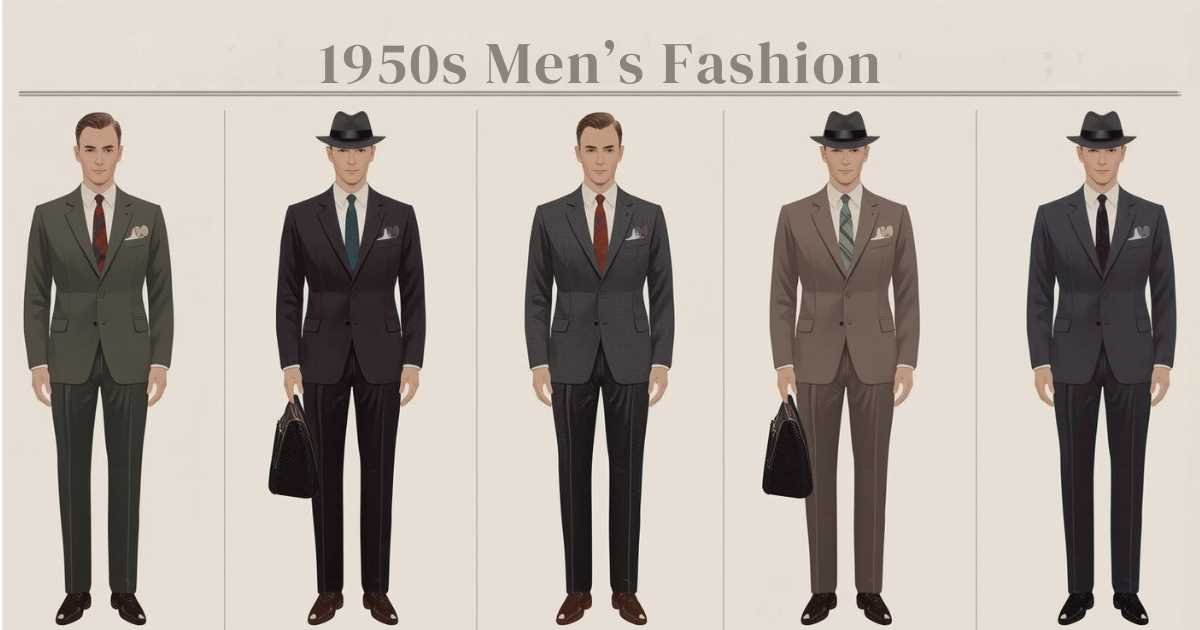
The 1950s stand as one of the most structurally important decades in the evolution of men’s fashion. Rather than introducing fleeting trends, this era created a complete design philosophy that reshaped how men dressed, carried themselves, and communicated identity through clothing. In a society rebuilding itself after global conflict, fashion became a tool for restoring confidence, order, and purpose.
Men’s fashion in the 1950s was not accidental. Every cut, fabric choice, and styling decision reflected deeper cultural values—discipline, masculinity, ambition, and respectability. These values continue to shape modern menswear, making the 1950s a foundational era rather than a nostalgic one.
Need more inspiration? Our blog section is packed with fresh articles, tips, and advice. Dive in.
Reconstruction, Stability, and the Need for Visual Order
The post-war world demanded stability. Governments, corporations, and families were rebuilding systems that had been disrupted for years. In this climate, appearance mattered. Clothing served as a visual signal of reliability and structure in an uncertain world.
Men were expected to look composed and controlled. Fashion responded by favoring symmetry, tailored fits, and restrained elegance. Excess ornamentation disappeared, replaced by clean lines and intentional design. This period marked a shift from clothing as survival gear to clothing as social language.
Design Philosophy: Why 1950s Fashion Still Feels “Right”
What separates 1950s menswear from many other fashion eras is its clarity of purpose. Designers were not trying to shock or disrupt—they were trying to refine.
The guiding principles included:
- Enhancing the male silhouette without exaggeration
- Prioritizing proportion and balance
- Valuing craftsmanship over decoration
- Creating garments that aged well, both physically and stylistically
This philosophy explains why a 1950s-inspired outfit still feels appropriate in modern settings.
The Suit as Social Architecture
In the 1950s, the suit functioned like social architecture—it structured how men moved through the world. Wearing a suit was not about formality alone; it was about alignment with social expectations.
Tailoring became more advanced, focusing on anatomical structure rather than generic sizing. Jackets framed the torso, trousers encouraged upright posture, and materials were selected for durability as well as comfort.
Structural Elements of the 1950s Suit
| Element | Functional Purpose |
|---|---|
| Defined shoulders | Conveyed authority |
| Narrow waist | Created athletic proportion |
| High-rise trousers | Improved posture |
| Wool-based fabrics | Longevity and breathability |
| Neutral color tones | Versatility across settings |
Leisurewear and the Democratization of Style
One of the most revolutionary aspects of 1950s men’s fashion was the rise of leisurewear. For the first time, style was not limited to formal or professional contexts.
Casual clothing gained legitimacy as men began valuing comfort alongside presentation. Simple garments like cotton T-shirts and denim trousers became symbols of ease and authenticity.
This was not a rejection of elegance—it was a redefinition of it. Casualwear in the 1950s was still intentional, clean, and restrained.
Media Influence and the Expansion of Masculine Identity
The 1950s marked the first era where mass media consistently shaped fashion behavior. Cinema and music did more than entertain—they modeled new ways of being male.
Some figures represented controlled sophistication, reinforcing traditional masculinity. Others embodied emotional depth, rebellion, and youth-driven identity. This contrast expanded the definition of masculinity itself.
Outerwear as Symbolic Armor
Jackets in the 1950s functioned almost like symbolic armor. They communicated who a man was before he spoke.
Outerwear and Identity
| Jacket Category | Psychological Signal |
|---|---|
| Leather | Defiance and autonomy |
| Bomber | Structure and function |
| Denim | Durability and realism |
| Overcoat | Power and respect |
Footwear: Silent Indicators of Character
In the 1950s, shoes were judged as indicators of self-awareness. Well-maintained footwear suggested discipline, reliability, and attention to detail.
Leather shoes dominated because they aged gracefully and required care. Casual footwear still respected form and proportion.
Accessories as Controlled Expression
Accessories in the 1950s were carefully chosen, not randomly added. Their role was to personalize an outfit without disrupting harmony.
Ties introduced pattern and color. Watches represented punctuality and responsibility. Hats framed the face and completed proportions.
Grooming as a Moral Statement
Grooming standards in the 1950s went beyond aesthetics. A neat appearance was considered a moral responsibility.
Hair was styled deliberately. Facial hair was controlled. Clothing was pressed and clean. These habits reinforced the belief that self-presentation reflected inner values.
Youth Movements and the Seeds of Change
As the decade progressed, younger generations began testing boundaries. Music-driven culture encouraged emotional expression and physical freedom.
Slimmer silhouettes, relaxed attitudes, and bolder styling hinted at upcoming revolutions in fashion—yet structure remained central.
Why the 1950s Remain the Backbone of Modern Menswear
Modern menswear continues to rely on principles established in the 1950s:
- Fit over excess
- Simplicity over noise
- Structure balanced with comfort
- Identity expressed through restraint
Designers repeatedly return to this decade because it solved problems fashion still faces today.
Conclusion: The Architecture of Timeless Style
1950s men’s fashion succeeded because it treated clothing as architecture for the body and language for the self. It gave men tools to navigate professional life, social expectations, and personal identity with clarity and confidence.
Rather than fading, its influence deepened. The decade did not define a look—it defined a system. And that system remains the foundation of how men dress in the modern world.
FAQs
Why is 1950s men’s fashion considered foundational?
Because it established the core principles of modern tailoring, casualwear, and grooming.
What made the decade different from earlier eras?
Its focus on balance, proportion, and intentional simplicity.
Did 1950s fashion allow individuality?
Yes, through controlled variation in casualwear, outerwear, and accessories.
Is this style suitable today?
Absolutely—many contemporary outfits are modern interpretations of 1950s design logic.
What is the biggest lesson from 1950s fashion?
True style is built on purpose, not trends.
Want to explore more of what we have to offer? Take a step further and discover everything on our homepage. Check it out here.